 BESTPOOL
1 / 3
The 1988 Dutch national team had a legendary run at the UEFA European Championship, culminating in their first and only major international trophy. After a shaky start with a loss to the Soviet Union, the team, led by coach Rinus Michels, found their rhythm. They advanced from the group stage and defeated host nation West Germany in a thrilling semi-final, a moment of sweet revenge for the 1974 World Cup final.
The final was a rematch against the Soviet Union, and the Dutch were ready. Ruud Gullit, the team captain and a powerful presence on the field, scored the opening goal with a powerful header. But the most unforgettable moment came from Marco van Basten, who scored one of the greatest goals in football history—a spectacular volley from a nearly impossible angle that sealed the 2-0 victory. Van Basten finished as the tournament's top scorer with five goals, a testament to his incredible skill and clinical finishing.
"The partnership between Gullit, Van Basten, and Frank Rijkaard—often referred to as the 'Three Musketeers'—was the heart of the team's success, blending power, creativity, and technical brilliance to bring home the trophy."
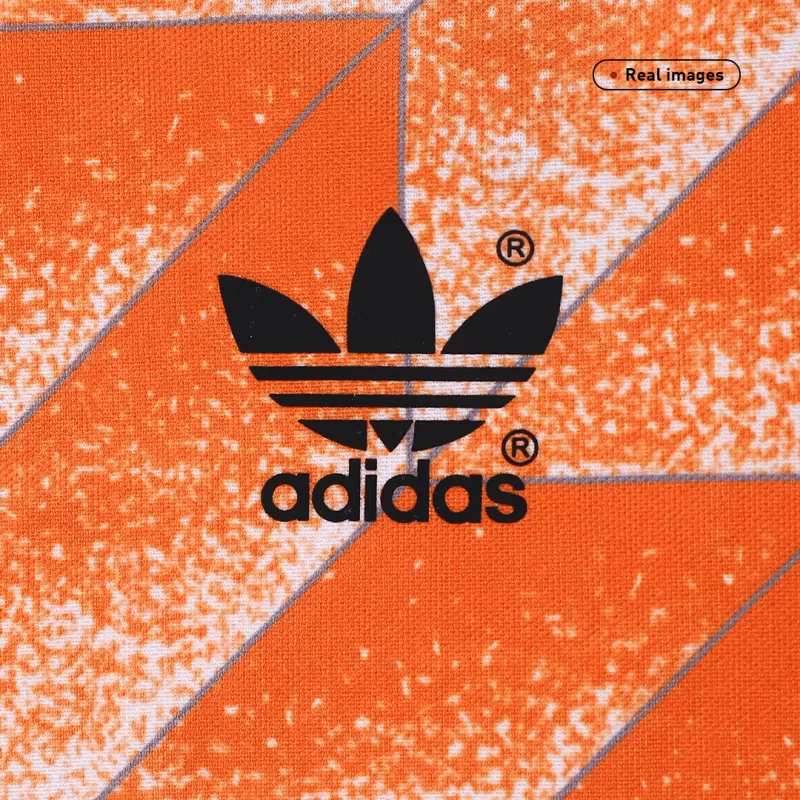
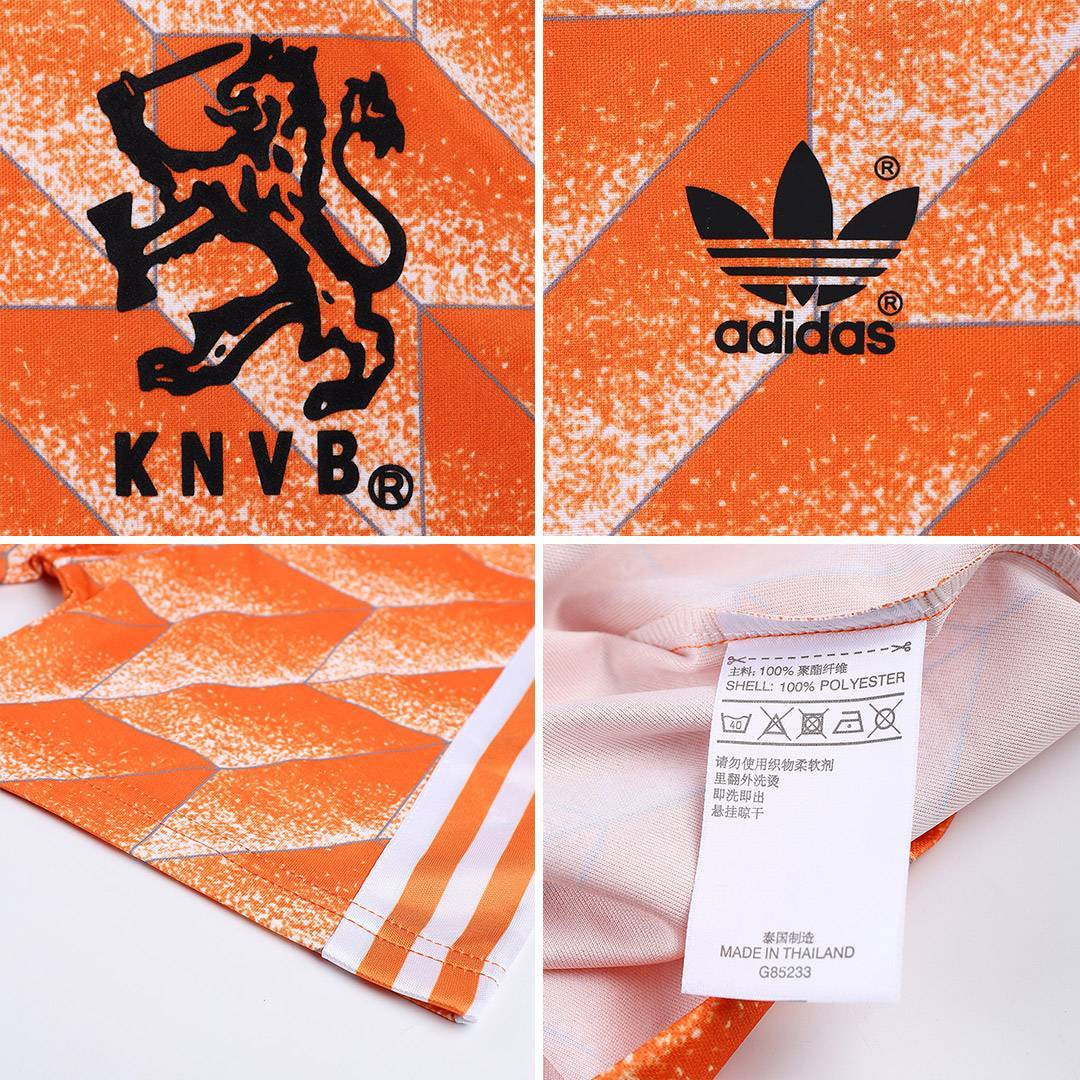
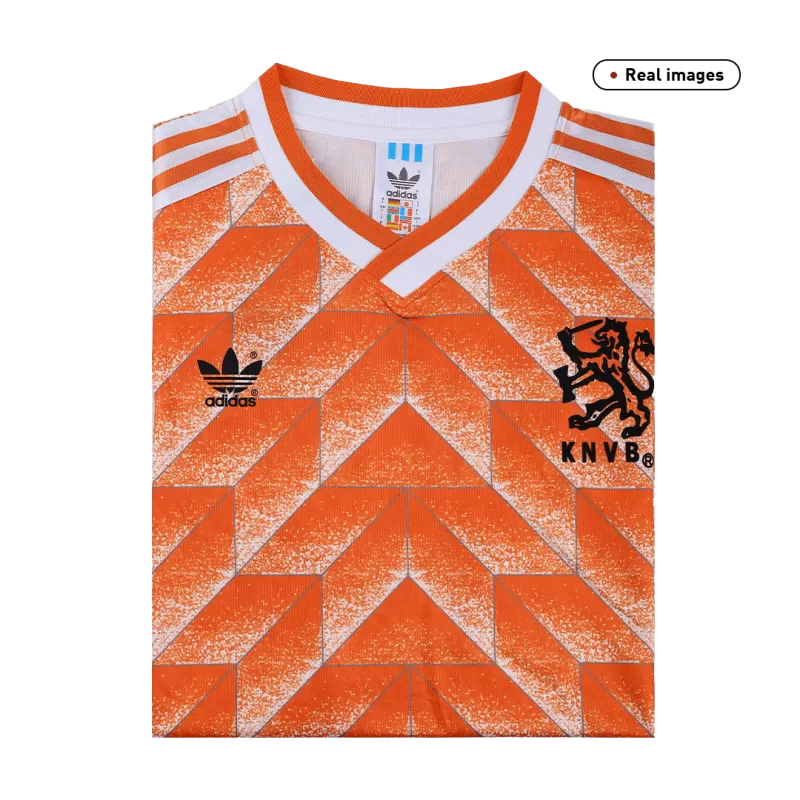
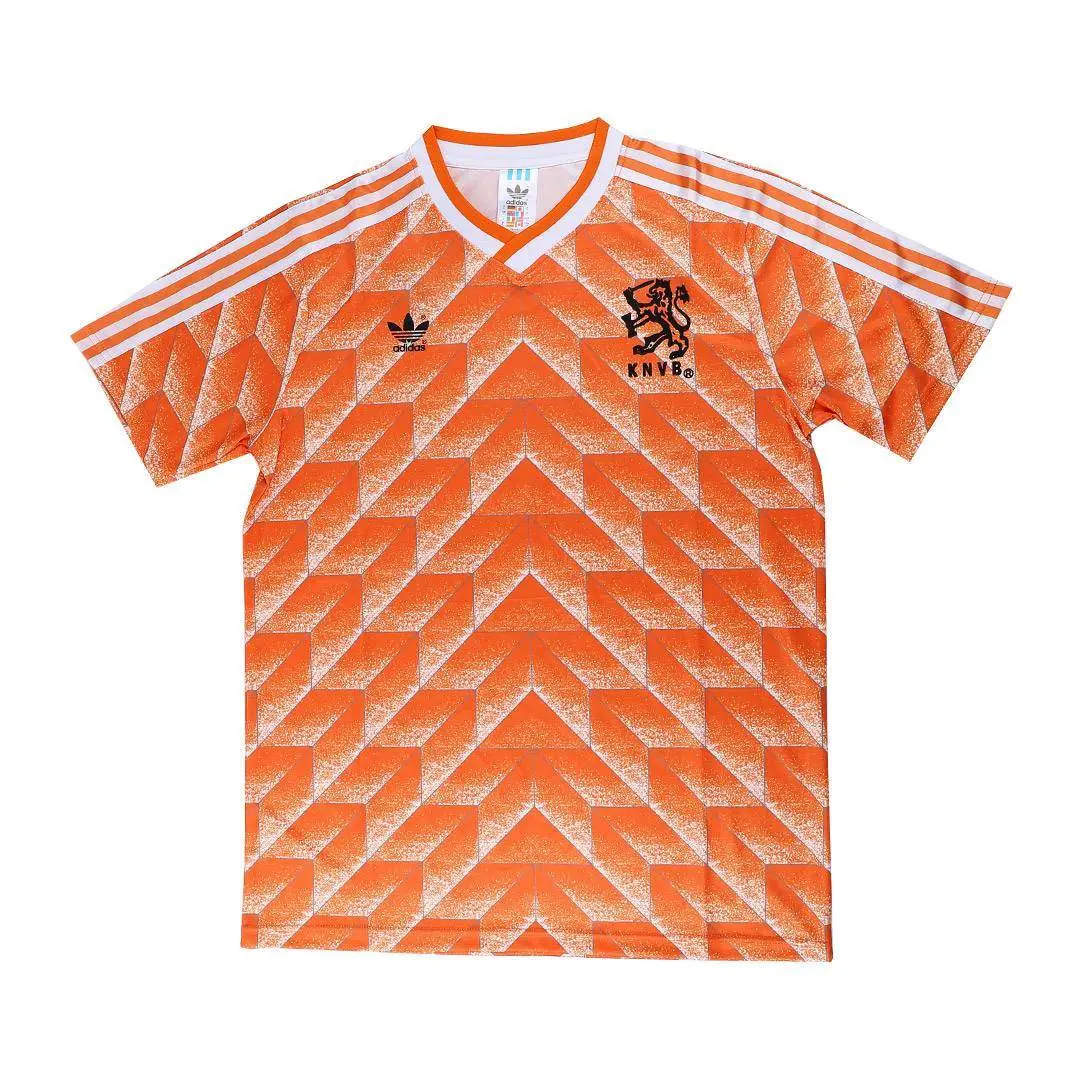
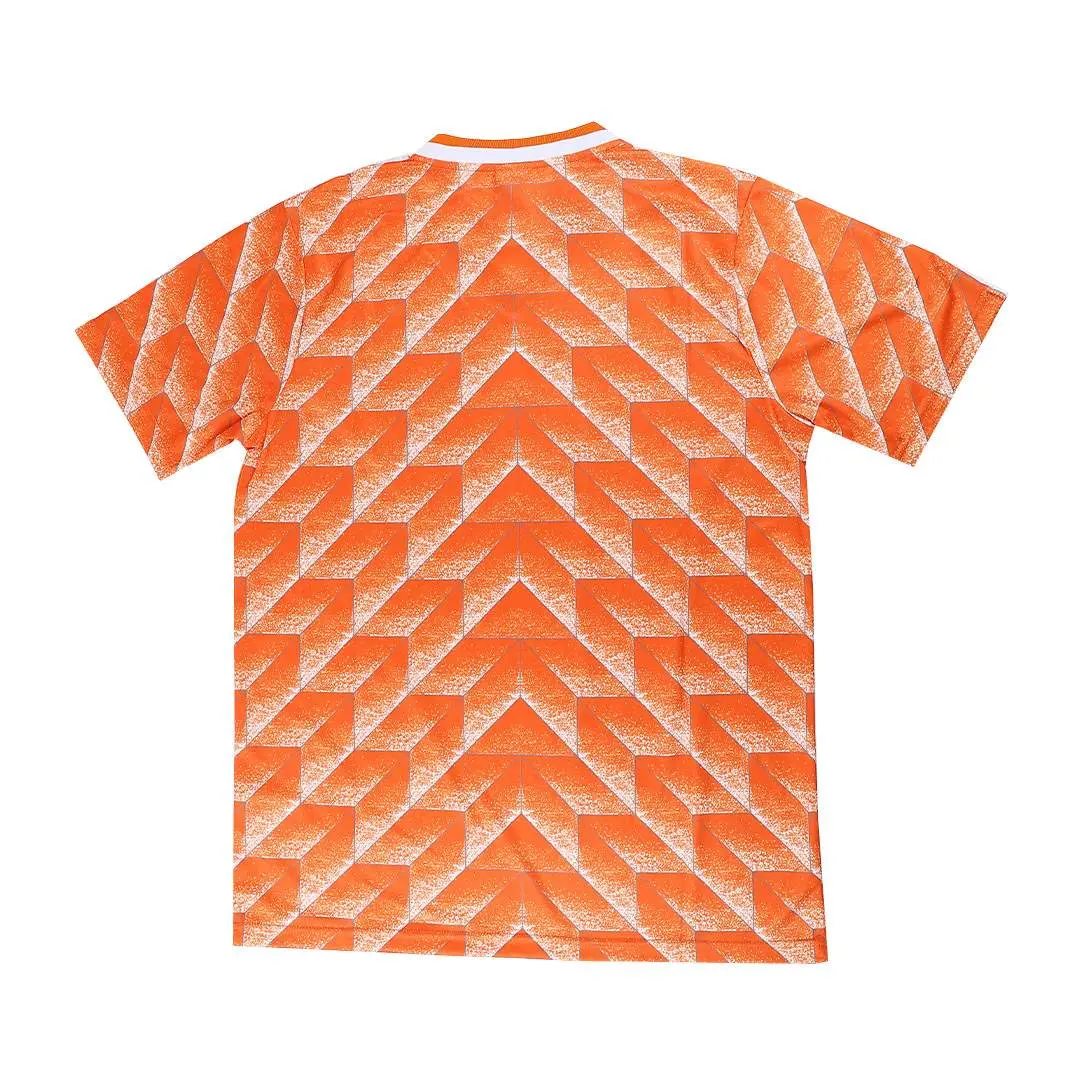
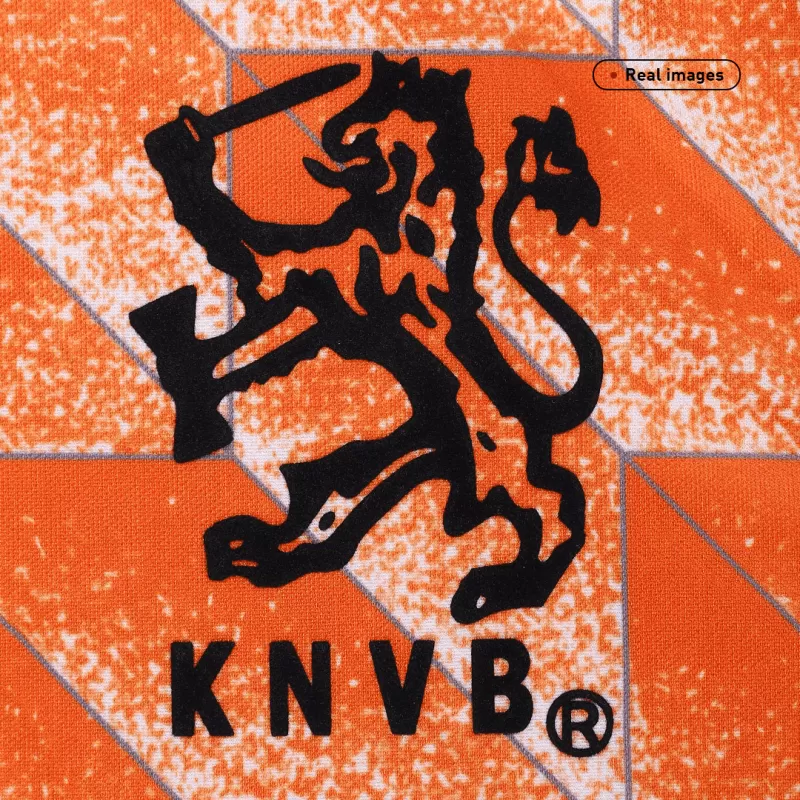
The 1988 Netherlands home jersey is a true work of art, a revolutionary design that broke from tradition. Its bold, geometric pattern was inspired by the De Stijl art movement (also known as Neoplasticism), a Dutch artistic movement from the early 20th century. De Stijl artists, such as Piet Mondrian, championed abstract art with a focus on simple geometric shapes, primary colors, and straight lines. The jersey's design, with its overlapping, fragmented lines and angular shapes, is a direct nod to this modern art style, bringing a sophisticated, artistic flair to the football pitch.
"This design wasn't just about aesthetics; it was a statement. It represented a new, progressive, and forward-thinking era for Dutch football. The jersey captured the rebellious spirit and creative energy of the team, which played with a freedom and style that was ahead of its time."
It’s a powerful symbol of how the team's artistry on the field was reflected in their iconic kit, forever linking the legendary victory of 1988 with a truly unforgettable design.
The 1988 Dutch national team won the UEFA European Championship, securing their first and only major international trophy by defeating the Soviet Union 2-0 in the final.
Ruud Gullit scored the opening goal with a powerful header, followed by Marco van Basten's historic, spectacular volley from a nearly impossible angle to seal the victory.
The "Three Musketeers" refers to the iconic trio of Ruud Gullit, Marco van Basten, and Frank Rijkaard, whose combined power, creativity, and technical brilliance drove the team's success.
The jersey's bold, geometric pattern was inspired by the De Stijl art movement (also known as Neoplasticism), a Dutch artistic movement from the early 20th century popularized by artists like Piet Mondrian.
Beyond aesthetics, the design made a statement representing a new, progressive, and forward-thinking era for Dutch football, capturing the team's rebellious spirit and creative energy.